
 AR
AR
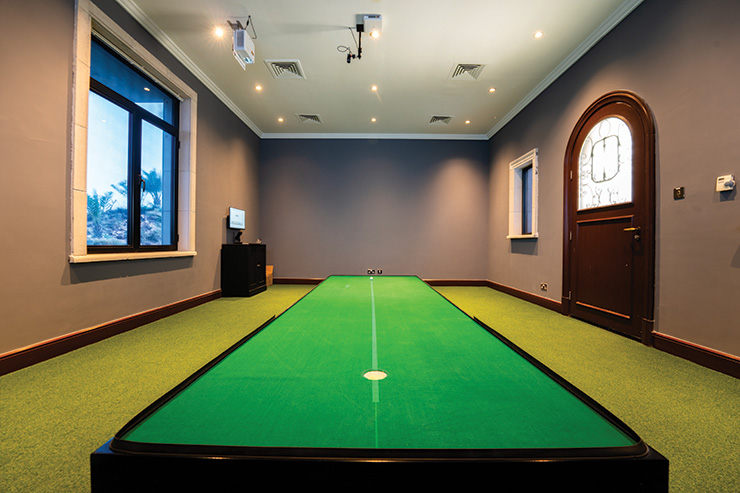
Rory Flanagan built his golf career around players, but these days his focus is on how the game is played off the course.
Before co-founding PLATFORM Golf, Irishman Flanagan carved his career as an agent, working his way up at Hambric Sports and alongside some of the biggest names in the game. Brooks Koepka during his early years in Europe, Tommy Fleetwood, Adrian Meronk and others. It gave the Dublin man a clear view of how players actually improve and, just as importantly, where the gaps were. But PLATFORM Golf grew out of one of those gaps.
“I always say it was the three Ps,” Flanagan explained. “People, product and practice. The product was the thing that really stood out to me early on.”
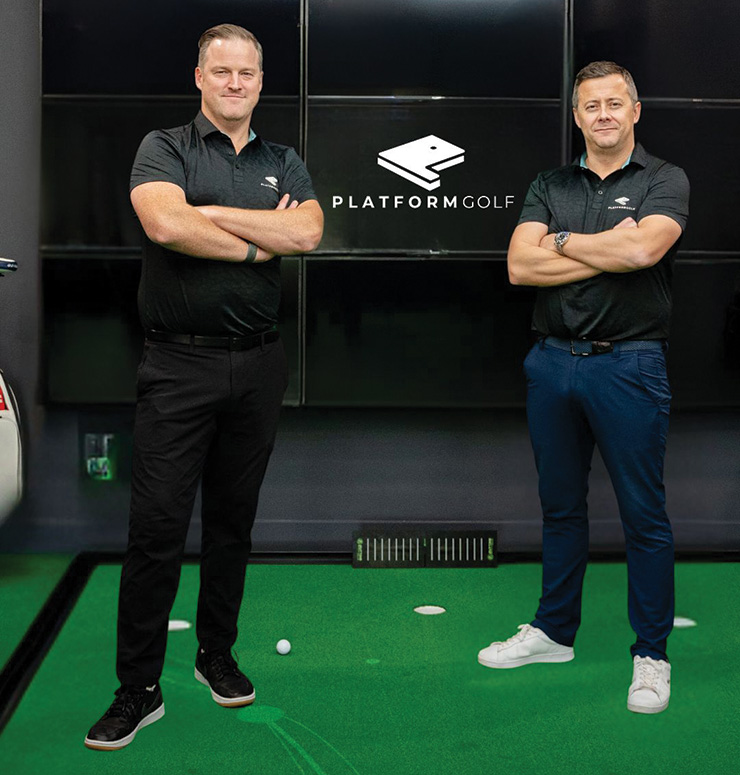
Thomas Hackett and Rory Flanagan are the co-founders of PLATFORM Golf
That product has changed quite a bit since those early days. What started as a putting-focused concept has turned into a full indoor system built around one idea: making simulator golf feel more like real golf.
Through its patented platform and software, PLATFORM Golf introduces slope into the equation. Uneven lies for full swings, breaking putts you can actually feel under your feet. It sounds simple, but it addresses something that has always been slightly off with indoor golf.
“Indoors, everything is flat,” Flanagan says. “But if you think about it, 96 per cent of shots on a golf course aren’t. That’s the piece we’ve focused on.”
That thinking is a big part of why PLATFORM has partnered with Trackman. The integration brings together two sides of the same equation. Trackman handles ball data and simulation at the highest level. PLATFORM adds the physical environment around it.
It’s a combination that’s starting to show up in more places, including here in the Middle East.
Yas Links Abu Dhabi is the first venue in the region to install PLATFORM units, adding three systems into its academy. For a course that already has a strong reputation for coaching, it’s a meaningful upgrade rather than a gimmick.
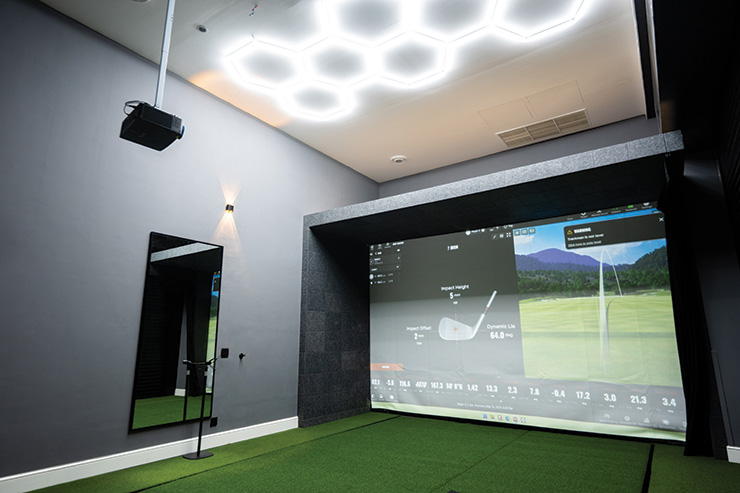
PLATFORM Golf
The appeal is pretty straightforward. Players can work on shots from uneven lies and putt on a surface that actually moves, which is something traditional simulators haven’t been able to offer. It also fits the way golf is used in the region.
Indoor golf isn’t just a winter alternative in the Middle East. During the summer heat, it becomes essential. Coaching, practice, corporate events, even casual play all shift indoors for a few months of the year. That creates a different kind of demand compared to Europe or the US. Flanagan sees that as a natural fit.
“All the data shows indoor golf is growing much faster than traditional golf,” he says. “It’s more accessible, it’s easier to engage with, and in places like the Middle East, there’s a real need for it.”
That accessibility piece comes up a lot in how PLATFORM Golf is positioned. Golf in the region still carries a premium feel, and while that’s part of its appeal, it can also be a barrier.
The company has tried to address that in practical ways. Lowering the height of the platform to make it easier to install in different spaces. Bringing down the cost compared to other systems. Offering different versions depending on what a facility or developer actually needs. That last part is starting to matter more.
Across Dubai and Abu Dhabi, new developments are being built around lifestyle. Gyms, wellness spaces, shared facilities. Golf simulators are starting to sit in that mix, whether in residential buildings or private villa communities. Flanagan says those conversations are already happening.
“We’re part of that discussion now,” he says. “When developers are deciding what goes into a space, golf is becoming one of the options. It’s about differentiation.”
It’s not just about serious golfers either. A lot of indoor venues in the region are built around social use, where the golf is only part of the experience. Food, drinks, groups that might not have played before.
If someone who doesn’t play golf steps into a simulator, it can be a bit of a strange experience. Flat lies, perfect conditions, not much connection to what the game really feels like. Adding slope and movement makes it more intuitive, even if the player doesn’t realise why.
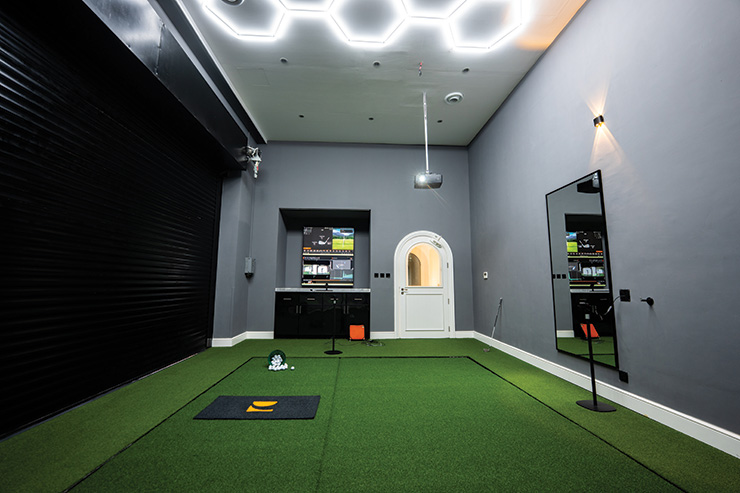
PLATFORM Golf
At the other end of the spectrum, it gives better players something closer to proper practice. Golf is opening up, but it still needs to keep its core.
“You’ve got all these new people coming into the game, which is great,” he says. “But you still need to give them a pathway to improve, and that’s where this kind of technology comes in.”
There’s also a coaching angle to it.
PLATFORM has started building out what it calls its Academy, a digital layer that connects coaches and players through the system. With names like Claude Harmon III involved, and with Harmon based in Dubai, there’s a clear link back into the Middle East.
The idea is that a coach doesn’t need to be in the same place as the player anymore. As long as both are using the same setup, the session can still be relevant.
It’s a different model, but one that fits where the game is heading, especially in regions that are investing heavily in golf infrastructure.
For now, though, the focus is still on getting the product into the right places. Yas Links is one of them. There will be more.
PLATFORM Golf is not trying to replace traditional golf. The aim is to make everything around it better, especially when being on the course isn’t always an option. In the Middle East, that’s not a small detail.
Follow Golf Digest Middle East on social media
Main Image: PLATFORM Golf


