
 AR
AR
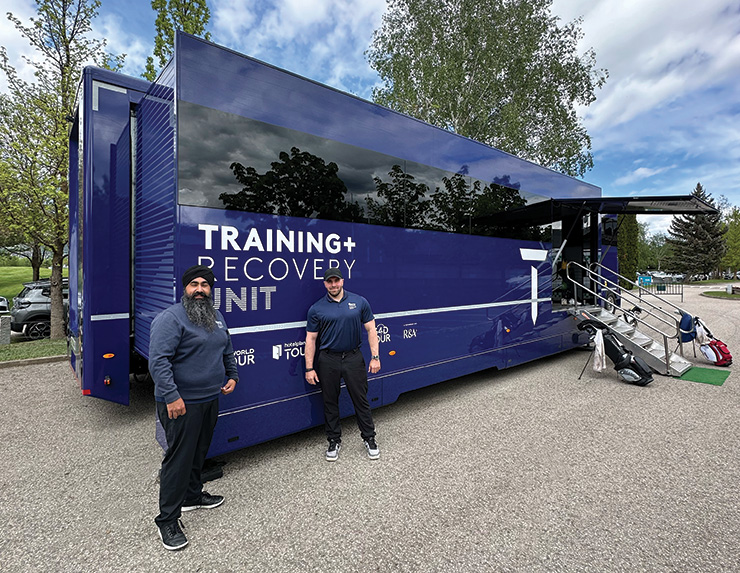
The modern tour pro isn’t just a golfer – they’re a full-time athlete. We go behind the ropes with European Tour Performance Institute’s Therapy Lead and Strength and Conditioning Lead to find out what it takes to survive a season
Modern professional golf looks very different from the game it was 20 years ago. Today’s players travel constantly, train like elite athletes and rely heavily on support teams to stay healthy and competitive throughout a relentless season. At the heart of that support system on the HotelPlanner Tour are Therapy Lead Poora Singh and Strength and Conditioning Lead William Wayland. Between them, they help players manage everything from recovery and rehabilitation to training, sleep and workload management — all while navigating the unique pressures of life on tour.
● ● ●
What does a typical tournament week look like for you both?
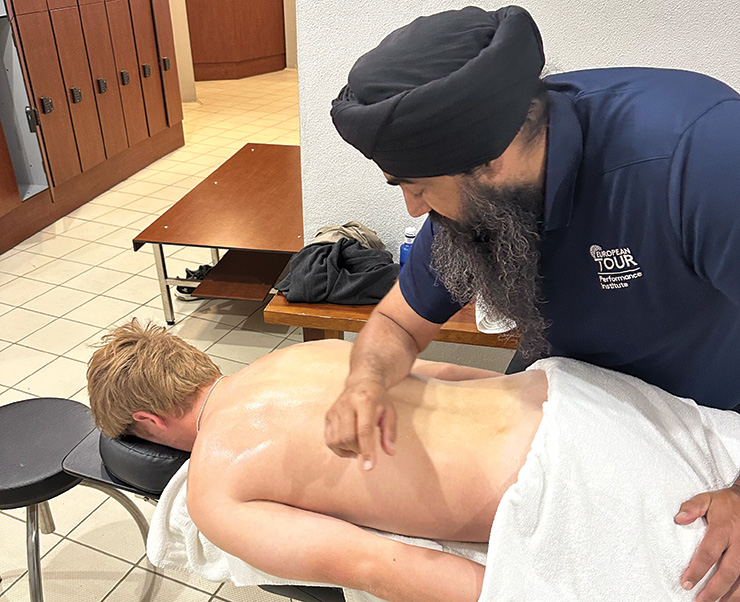
Poora Singh: During a typical week on the DP World Tour and HotelPlanner Tour, we’ll usually arrive on the Monday and recce the venue. We’ll find out where the treatment unit is, where access to emergency services is, where the gym and recovery areas are and all those kinds of things. Then we’ll start on Tuesday morning. On the HotelPlanner Tour, players book 30-minute treatment sessions through our booking system, and we’ll usually work from around 10am until 6pm.
Once the tournament starts, the days become much longer. Wednesday is a pro-am day, so we’ll start at 7am and work through until 6pm. That then continues through Thursday, Friday and Saturday, with Sunday usually finishing around lunchtime. On average, we’ll each see around 18 players a day, so it can be very intense.
On the DP World Tour, there are more physios and no booking system because there are usually three physios on at all times. The working day runs from an hour and a half before the first tee time until an hour and a half after the final group comes in. At events like The Open, where tee times can start at 6am, you’re arriving at 4am or 4:30am. The hours are demanding, but that comes with the territory.
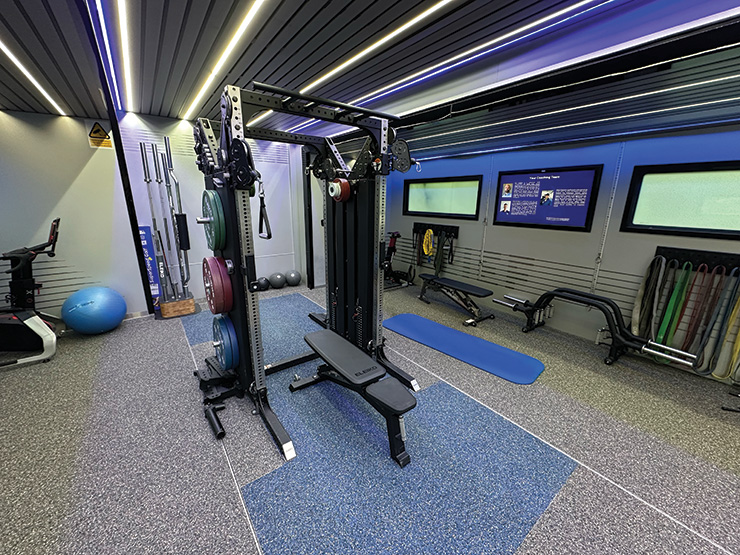
William Wayland: I generally arrive on the Monday as well and assess what facilities we have available. Sometimes we’ll have a gym truck on site, but that’s not always the case on the HotelPlanner Tour, so we often have to find local gyms or training facilities nearby and organise access for players during the week.
Typically, I’m there from early Tuesday morning until around 6pm, then the same again on Wednesday.
Most of the work is one-to-one coaching with players. That can include physical testing, training sessions, programming adjustments or rehab support where players have been referred over by the physios.
There are also players who work with us regularly throughout the season, while others might only come in occasionally for assessments or specific help.
● ● ●
How physically demanding is modern professional golf compared to what people might expect?
WW: The sport has become increasingly physically demanding and you can see that in the players themselves. They’re taller, heavier, more muscular, more explosive and generally much stronger than golfers were 20 years ago. That tells you something fundamental has changed in the nature of the game.
In the past, there wasn’t a huge physical gap between golfers and athletes in other sports. Now, the physicality of elite golfers has changed dramatically, particularly over the last two decades, and that’s reflected in the style of golf they play.
● ● ●
What are the most common injuries or issues you deal with?
PS: If we’re talking purely about areas of the body, lower back issues are the most common, followed closely by hips, necks, shoulders, wrists and knees.
A lot of what we see are fatigue-based injuries. Players might have been on the road for six or seven weeks straight, not recovering properly, not sleeping well enough or not maintaining good nutrition and training habits.
You have to remember they could be hitting 200 to 300 balls a day, then playing tournament rounds, finishing late in the evening, trying to recover and eat properly, then waking up at 5am for another early tee time. It’s incredibly demanding physically. If those recovery habits aren’t in place, eventually the body struggles to keep up.
Then there are also the more unpredictable injuries. A player can hit a hidden root or a heavy divot and hurt their wrist, elbow or shoulder. We’ve had players tear calf muscles or Achilles tendons after slipping on hills. But generally, I’d say the biggest risk comes from repetition and volume rather than the sport itself.
● ● ●
Is the growing emphasis on speed in golf contributing to those injuries?
PS: Absolutely. Everybody wants to hit the ball further now, but to create speed you also need the ability to control and decelerate that speed safely. That only comes from proper conditioning, training and understanding how the body works.
WW: To tolerate those forces, you need a certain level of physical robustness. If players don’t have that — or if they’re constantly chasing more speed — eventually tissue tolerance breaks down somewhere and that’s usually when injuries happen.
● ● ●
So a large part of your work is injury prevention rather than simply treatment?
PS: Definitely. A huge part of what we do is education. We try to teach players good habits and help them understand that while manual therapy and treatment have their place, you can’t beat good athletic habits, sensible training and proper nutrition.
Those things are what keep players healthy and available to compete week after week.
● ● ●
What recovery methods are players relying on most during tournaments?
WW: The biggest thing for us is what we call performance lifestyle planning. At the top of that is sleep. Everything is downstream from sleep. If players aren’t sleeping properly, injury risk goes up, illness risk goes up, fatigue increases and performance suffers. We spend a lot of time talking about sleep hygiene — keeping rooms cool and dark, avoiding screens and stimulants before bed and creating a proper environment for recovery.
Nutrition is another huge factor. One thing we often see during the season is players unintentionally losing weight because they underestimate how many calories they’re burning. If they lose muscle mass and strength across the season, injury risk increases and performance can drop.
Then there’s training itself. We want players following well-rounded strength and conditioning programmes that support what they’re trying to achieve physically.
One thing we always say is to avoid making dramatic changes during the season. Introducing too much novelty mid-season can create problems.
There’s also the mental side of tour life. It can be lonely and mentally draining, so having strong relationships with friends, coaches and family is incredibly important.
Finally, we encourage players to monitor how much golf they’re actually playing. Golfers often manage their own workloads and sometimes they’re not very good at recognising when they’re doing too much.
● ● ●
Poora, you’ve been around the game for nearly two decades. How have you seen golfers change during that time?
PS: Massively. When I first came into golf, player support was incredibly basic. You’d have a treatment table in the locker room and maybe a few resistance bands.
I came from a high-performance athletics background where sports science and conditioning were already standard, so when I joined golf I was shocked by how little of that existed. A lot of it was cultural. Golf had this old-school mentality where people believed weights would make golfers slower and that players only needed to practise golf itself.
Over time, through the work of the European Tour Performance Institute and the support systems on the HotelPlanner Tour and DP World Tour, we’ve helped re-educate players and coaches about the athletic side of performance.
Now, players understand that if they want to compete consistently across six or seven events in a row, they need to treat themselves like elite athletes. I’m genuinely very proud of how far things have come.
● ● ●
What separates the players who stay healthy all year from those who struggle physically?
PS: The players who stay healthy are usually the ones with the best habits and routines. Some younger players still come from environments where they’ve been told to just play golf and everything else will take care of itself. But once they experience life on tour, they realise very quickly that isn’t enough.
The standard on the HotelPlanner Tour and DP World Tour is incredibly high. If you can win on the HotelPlanner Tour, you’re good enough to compete at the very highest level. The players who succeed long-term are the ones who look at what elite players are doing and adopt those same professional habits around training, nutrition and recovery.
● ● ●
You also seem to create a relaxed and supportive environment for players. How important is that?
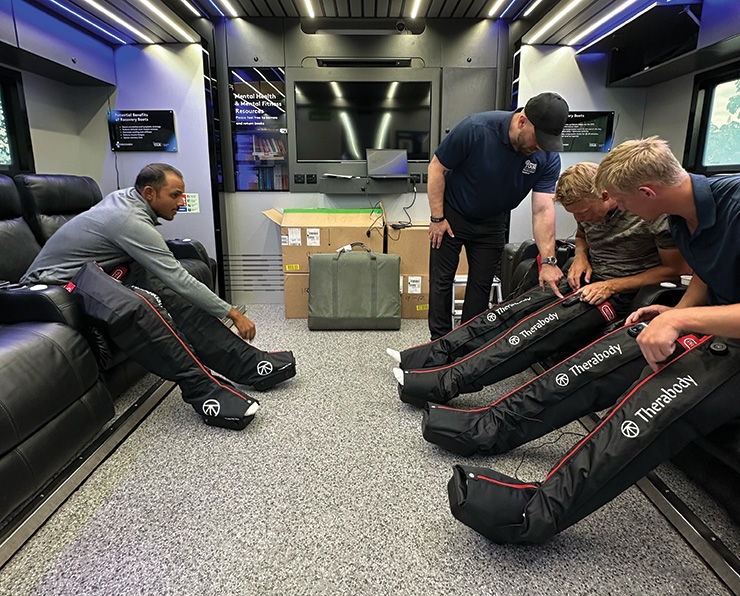
PS: It’s a very conscious part of what we do because tour life can be lonely. We want players to feel comfortable coming into our space, whether that’s for treatment, recovery or simply to switch off mentally for a while. Sometimes a player just wants to sit in recovery boots, listen to music and relax. Sometimes they need somewhere quiet to sleep for an hour. It’s about creating an environment where players feel safe and supported.
WW: It becomes a kind of third space for players. They spend all day around competitors, either on the course or in the clubhouse, so having somewhere they can properly relax and let their guard down makes a huge difference.
Some players don’t even come in to train — they just want to sit down and talk. That in itself can be really valuable during a long season.
● ● ●
Is it difficult stopping players from overtraining?
WW: It depends on the individual because golfers tend to be very process-driven people. A lot of them want to optimise everything — sleep, diet, routines, recovery — and because golf is such a technical and psychological sport, players can become very analytical about performance. We encourage them to take a balanced, holistic approach rather than becoming obsessed with any one method. But generally, if players overdo anything, it’s usually golf itself.
One of the biggest injury mechanisms in golf is simply too much golf. We rarely see injuries caused by sensible strength and conditioning work. It’s usually the repetitive volume of golf practice and competition that creates problems.
● ● ●
How important is it for the two of you to work closely together?
WW: We work as part of a multi-disciplinary team, so we’re constantly referring players between each other. A player might come to Poora with an issue and then be referred to me because there are underlying strength or movement deficiencies that need addressing.
Likewise, if I feel something is more medical or rehab-focused and outside my expertise, I’ll refer the player back to Poora. It’s a very collaborative relationship.
PS: The medical team is involved as well. If we feel a player needs scans or medical assessment, we’ll bring the doctor in and make decisions together. The players are always looked after collectively.
WW: It also helps that me and Poora genuinely like each other. That makes the whole environment work better because there’s trust within the team.
PS: I trust Will completely and I know the players are in world-class hands with him.
That’s a huge part of building a successful multi-disciplinary team — making sure everyone is highly skilled, experienced and working together towards the same goal.
Follow Golf Digest Middle East on social media
Main Image: Harry Grimshaw


