
 AR
AR
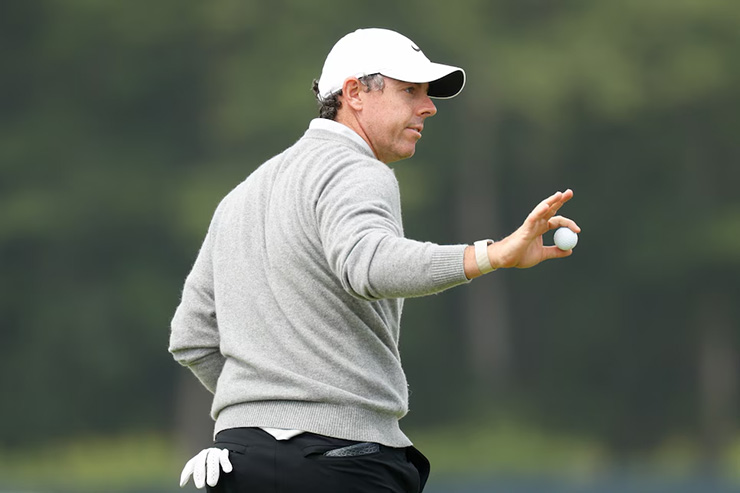
Rory McIlroy made eagle at the fifth and the extrapolating began. With wind off his back at the par 5, his drive finished a few skips shy of 400 yards, leaving a pitching wedge that he stuffed to 10 feet and converted. The kind of shots and score that can be retrofitted for the narrative that everyone else is playing for second. There is an inclination at major championships to make large things out of early evidence, forgetting that time will eventually sort what was fleeting from what is forever. Sometimes a moment isn’t an omen, just a thing that happened.
And yet, occasionally a day reveals something. The fifth may prove to be a window, but Thursday itself was the larger one, a reminder of the expanse between the player Rory McIlroy once was and the one who signed for a 69 after Round 1 and finds himself exactly where he belongs.
“I think with the conditions today, anything under par or anything around even par is a good score,” McIlroy said Thursday afternoon at Shinnecock Hills. “It was a day to really just keep yourself in the tournament and not shoot yourself out of it, which is exactly what I did eight years ago here.
“So sort of went out with the mindset that pars were going to be good, and if you could pick up a couple of birdies here and there, that’s always a bonus. But really just minimising the mistakes. I did that for the most part today. It’s so tough. It’s so difficult.”
RELATED: U.S. Open 2026 Power Rankings: The entire field ranked at Shinnecock Hills
Eight years ago, the last time this venue hosted the national championship, Shinnecock felt like a perfect fit. McIlroy arrived two months removed from the final pairing at Augusta, and the course’s wide corridors seemed to invite exactly what he did best: uncork the driver, accept the consequences, overwhelm whatever remained. He shot 80 in the opening round and was home by the weekend. One bad day, maybe. Except Shinnecock is perhaps the most complete examination in American golf, and what it found was already suspected, that McIlroy was less a complete player than a spectacular one. A bomb-and-gouger. Brilliant on courses that asked little of him, uncertain on courses that asked everything. He couldn’t always read the moment. When to hunt, when to survive, when to simply get out of his own way.
The criticism was a little unfair. McIlroy had four majors, a historic ball-striking gift, and a game that could make other professionals feel inadequate. But the criticism, in the places that mattered, was not quite untrue.
“I felt like my game was good coming in here,” McIlroy said that Friday in 2018. “I think I was just blown away by the wind yesterday. That was the thing. I mean, I haven’t played in wind like that for quite a long time. I just felt like I couldn’t hit it far enough left or right to allow for the wind.”
The years between have told a different story. The Masters the last two springs, Bethpage last fall, and Thursday suggested that story isn’t finished.
Look to the fifth. The drive is what played on social media, but it was the approach from 194 yards, stuffed to 10 feet, and the putt that followed that told the real story. Off-the-tee prowess remains the foundation, but his irons are good now, his wedges sharper, and the putting can occasionally be great. He was second in the morning wave in strokes gained on the green. The eagle wasn’t a highlight as much as an argument.
But if you’re wondering why the wind couldn’t find him, look to the club that doesn’t fit in the bag. Course management. Patience. The knowledge of when to hunt and when to simply not lose ground. McIlroy has spent years making it the equal of everything else in his arsenal, and now it’s his most important weapon. It wasn’t all pretty, because of course it wasn’t. But some of the biggest wins on Thursday for McIlroy were keeping big numbers at bay, like saving par when his approach launched off a path and a fan picked his ball up, or bouncing back from back-to-back bogeys on his first nine.
“I think the big thing was I needed to change my mindset,” McIlroy said about the differences between then and today. “I’ve told this story before, but I played those two days in 2018, and then I got to the Travelers the next week. I remember like feeling so much in my comfort zone going to TPC River Highlands and thinking to myself, I’ve got this backwards. I should be in my comfort zone at Shinnecock and not here. So it was really just—it was an effort really—I wouldn’t say—like it hasn’t looked as if I’ve went and done a rebuild of my game, but it’s felt like it in terms of the way I approach the game and the value I place on certain shots and certain skills within the game.
“I remember flying back from Dubai at the end of 2018, and I would keep, like, a journal or a diary. I wrote in it that from 2019 going forward, I’m going to build my game to compete at the major championships and excel at the toughest tests that we have.”
RELATED: U.S. Open 2026 Power Rankings: The entire field ranked at Shinnecock Hills
Shinnecock was not at its cruellest on Thursday. The greens had been slowed, an acknowledgement by the USGA of what this course is capable of, what it did in 2018 when the setup became a scandal. The morning wave still played nearly four strokes over par. And sure, McIlroy navigated it in the favourable company of Ludvig Aberg and Tommy Fleetwood, European Ryder Cup teammates and men so constitutionally decent that simply standing near them lowers the cortisol. Until back-to-back bogeys at the finish, McIlroy made the whole exercise look like something other than what it was.
The U.S. Open will eventually remind everyone what it is. The wind will change direction, the greens will firm, the pins will move to places that seem less like golf holes than philosophical challenges, and every man in the field will spend at least one stretch of at least one afternoon wondering what, exactly, they are doing with their lives. McIlroy has been through enough to know that stretch is coming.
Maybe Thursday was a sign of what’s coming. Maybe it was just a good day of golf. Yet if you’re wondering why he’s turned into what the sport desperately hoped he’d become, 18 holes at Shinnecock was a reminder that McIlroy now has the answers, no matter the question.
Follow Golf Digest Middle East on social media
Main Image: Cliff Hawkins


