
 AR
AR
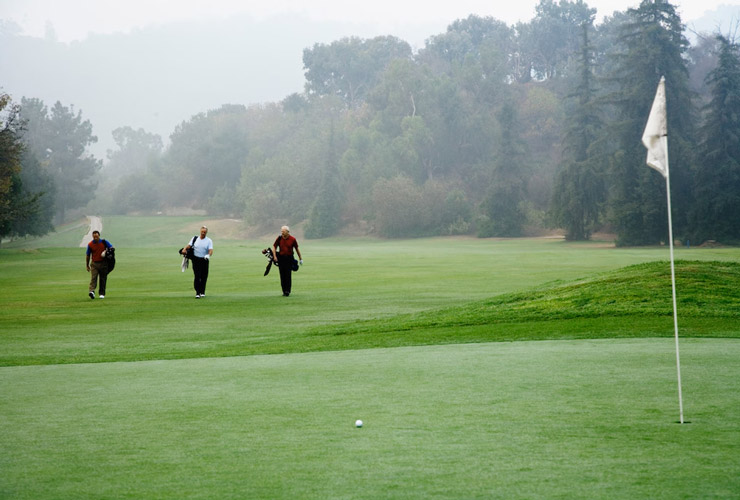
There have been dozens of studies over the years that conclude the health benefits of playing golf are far-reaching. Most focus on the physical aspects—better strength and balance, improved bone density, less risk of heart disease and strokes, etc.—but an often overlooked perk is what the game does for your mental well-being.
You might think that golf fosters anxiety, frustration and brings out the worst of human emotion (did you really throw your putter in a lake?). Sure, it can—but its benefits far outweigh those momentary losses of sanity, studies have concluded and experts say. With May being Mental Health Awareness Month, it’s worth reviewing some of the ways our sport is real brain food.
When you play golf, especially when you’re walking, all kinds of great neurochemicals are released—dopamine, endorphins, serotonin, oxytocin, etc. Not familiar with their roles? Dopamine is the chemical that gives you that awesome feeling when you purely strike a golf ball. It’s the stuff largely responsible for your desire to come back for another round (even if your only good hole was the 18th). Endorphins make things like your nagging knee pain lessen and put you in a state of satisfaction, even for a two-putt bogey. Serotonin reduces first-tee anxiety and frustration when good shots turn out bad. Finally, oxytocin is commonly known as the “bonding” hormone, the stuff that makes social settings like golf so enjoyable.
There’s a lot more to golf’s upside for your mind, but don’t take it from us. Dr. Julie Amato is a psychologist and director of mental wellness for the PGA Tour and LPGA Tour. Her job is to provide therapy and advice to the gals and guys who do this for a living. As you might image, the pressure to make a four-foot putt can be far more amplified in a pro golfer’s mind than what you might experience in a member-member tournament. That said, Amato still thinks that the game is a brain booster at any level.
“Golf is unique in that you play outside for a long period of time, typically with friends,” Amato says. “It’s not just the walking. It’s being in green space and connecitng with nature. And there’s the social activity. It can connect generations. Golfers share frustration and joy. It’s a great way of unifying people.”
Even if you don’t like to play golf, just going to a tournament and walking the course has great benefits for your mental health, she says.
Back in 2020, the R&A and the World Golf Foundation released a comprehensive study—the Golf & Health Project—detailing all the great ways the game is good beyond healthy competion. Looking back on the Covid-19 pandemic, golf literally saved lives because it was one of the few sources of recreation and socialization that could be done safely. Getting out of the house and doing something fun with someone beyond immediate family was such priceless during that lockdown.
University of Virginia professor Jenny Roe, an environmental psychologist, wrote in an article for Syngenta Golf during the pandemic that “contact with nature slows down our stress reponse and induces calm. There is evidence to show this is happening in our biological system. It is promoting stress resilience, it is improving our mood, it is decreasing our risk of depression and increasing our socialwell-being, particularly on a golf course where you are interacting with other members of that community. So, there are a host of mental and social well-being benefits.”
The R&A Report also cited a study on the mental benefits for children. Conducted by Carnoustie Golf Links and Abertay University, a group of children took part in a six-week program and were assessed on everything from golf skills to self-esteem. The children reported an increase in well-being in every testing category.
If that’s not enough to make you want to sneak out today and get in a quick nine, consider golf’s impact on the aging mind. The Center for Public Health Sciences in Tokyo conducted a major study collecting data from more than 43,000 seniors living in Japan. What they found was golfers had a 37 percent less chance of developing dementia than non-golfers. That might not suprise you when you consider how much brain activity goes into a typical round of golf—calculating distances, reading greens, swing thoughts, course management, etc.
Getting back to the mental aspects of golf that are not healthy (slamming clubs after missed shots, swearing when four-putting, failing to break 100), Amato says you need to change the way you think about the game.
First, she says develop consistent routines on the course. If you do everything the same way every time but sometimes get a bad result, it gives you mental permission to shrug off the outcome. “It’s easy to let yourself off the hook if you do those things,” she says.
If that doesn’t help, remember this: “You can choose to see golf as something you do for fun and accept what happens out there.”
In other words, you’re not paying your bills with your golf performance. So don’t act like it does.
Follow Golf Digest Middle East on social media
Main Image: Jupiterimages


